
Search and Rescue Operations
Course Program



Course Description
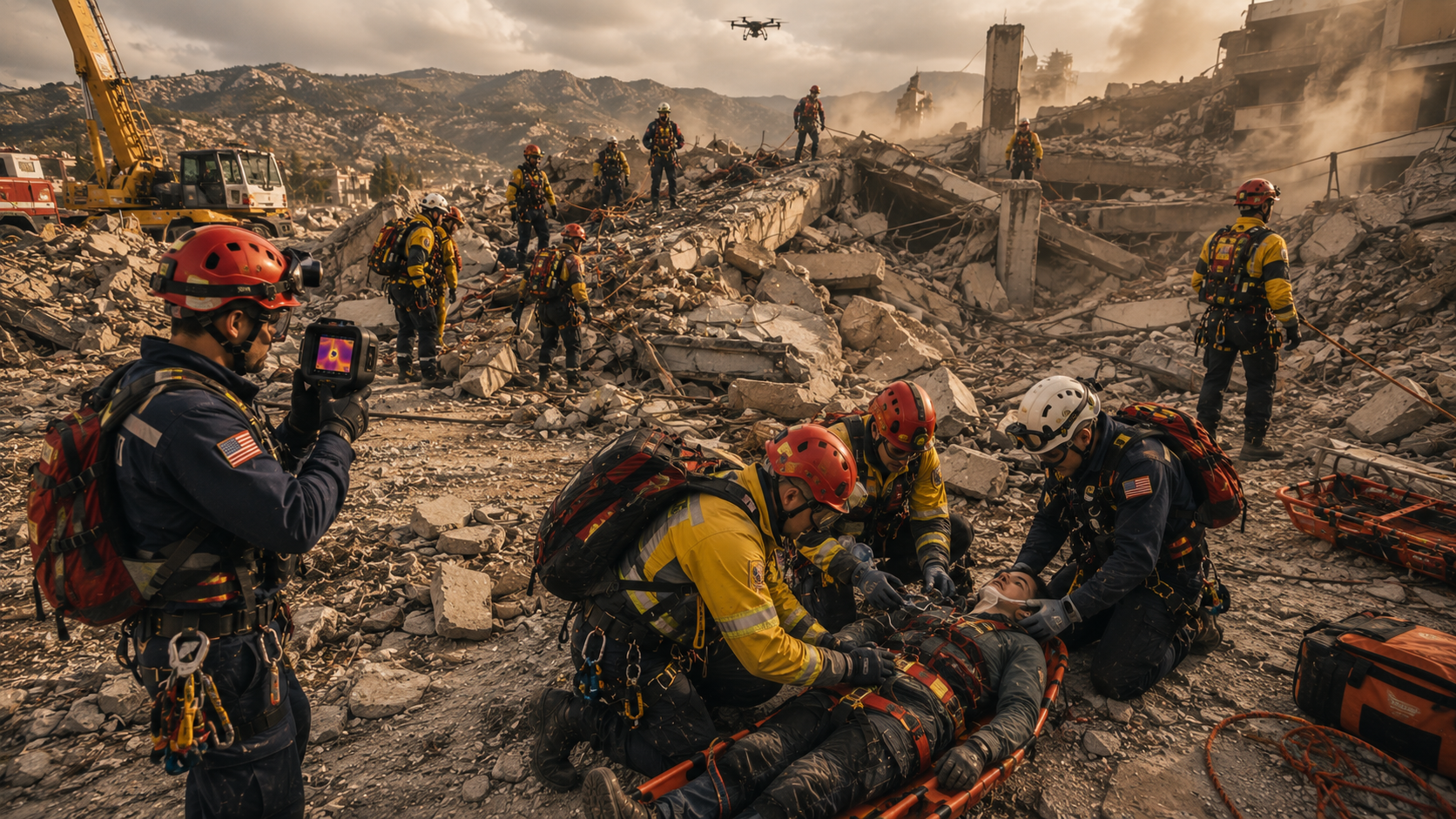
This Search and Rescue Operations course equips participants with the skills and knowledge to locate and aid individuals in imminent danger across various environments. The training emphasizes mission-specific techniques, safety protocols, and effective coordination to ensure successful outcomes in high-stakes rescue scenarios.
- Introduction to Search and Rescue (SAR):
Explains the purpose and importance of search and rescue operations, including the challenges, risks, and responsibilities faced by emergency responders during life-saving missions. - Types of Search and Rescue Missions:
Covers various SAR operations including mountain rescue, urban search and rescue (USAR), combat search and rescue, and air-sea rescue missions conducted in diverse and hazardous environments. - Firefighter Search and Rescue Priorities:
Reviews firefighter rescue priorities during emergency incidents, including rapid victim location, thermal imaging operations, hazard assessment, and decision-making in dangerous environments. - Essential SAR Equipment and Rescue Techniques:
Explains the use of thermal imaging cameras, search ropes, marking systems, forcible entry tools, ventilation techniques, victim carries, and emergency drags used during search and rescue operations. - Coordinating Search and Rescue with Fire Suppression:
Focuses on integrating SAR operations with fire suppression activities through Incident Command coordination, communication systems, team management, and safety procedures such as Rapid Intervention Crews (RIC) and Two In/Two Out requirements. - Effective Search Patterns and Victim Location Techniques:
Covers systematic search methods including wall-oriented search patterns, room-by-room searches, area marking procedures, and coordinated techniques for locating and rescuing victims efficiently. - Search and Rescue Safety Considerations:
Reviews operational hazards such as structural instability, smoke, heat, hazardous materials, and rescuer fatigue while emphasizing PPE use, buddy systems, crew rotation, and risk-versus-benefit decision-making during rescue incidents.
Certifications Obtained Upon Completion
Certificate of Completion for Search and Rescue Operations Training
Regulatory Citations
NFPA 1006 (Standard for Technical Rescue Personnel Professional Qualifications)NFPA 1670 (Standard on Operations and Training for Technical Search and Rescue Incidents)OSHA Standards for workplace safety and rescue operations
Additional Notes
This course is ideal for emergency responders, firefighters, and rescue teams involved in high-stakes SAR missions.Emphasis is placed on practical skills, safety, and effective coordination to ensure successful rescue outcomes.