
Noise Monitoring
Course Program



Course Description
This course provides comprehensive training on understanding, measuring, and managing noise exposure in the workplace. Participants will learn the science of sound, health risks of noise exposure, regulatory standards, and effective noise mitigation strategies to ensure a safer work environment.
- Explains the difference between sound and noise, how sound travels through various materials and environments, and how perception of noise can vary depending on context and exposure conditions.
- Covers the fundamentals of noise measurement including the decibel (dB) scale, logarithmic sound levels, and the use of monitoring equipment such as dosimeters and sound level meters.
- Reviews the health and workplace safety impacts associated with excessive noise exposure including hearing loss, tinnitus, communication difficulties, stress, and cognitive performance effects.
- Explains OSHA and NIOSH occupational noise exposure standards, permissible exposure limits, and the importance of regulatory compliance in preventing hearing damage and workplace safety violations.
- Covers engineering and administrative noise control strategies including sound barriers, equipment maintenance, quieter machinery, task scheduling, and exposure reduction practices.
- Focuses on the selection and proper use of hearing protection devices such as earplugs and earmuffs, including understanding Noise Reduction Ratings (NRR) and personal protective equipment (PPE) requirements.
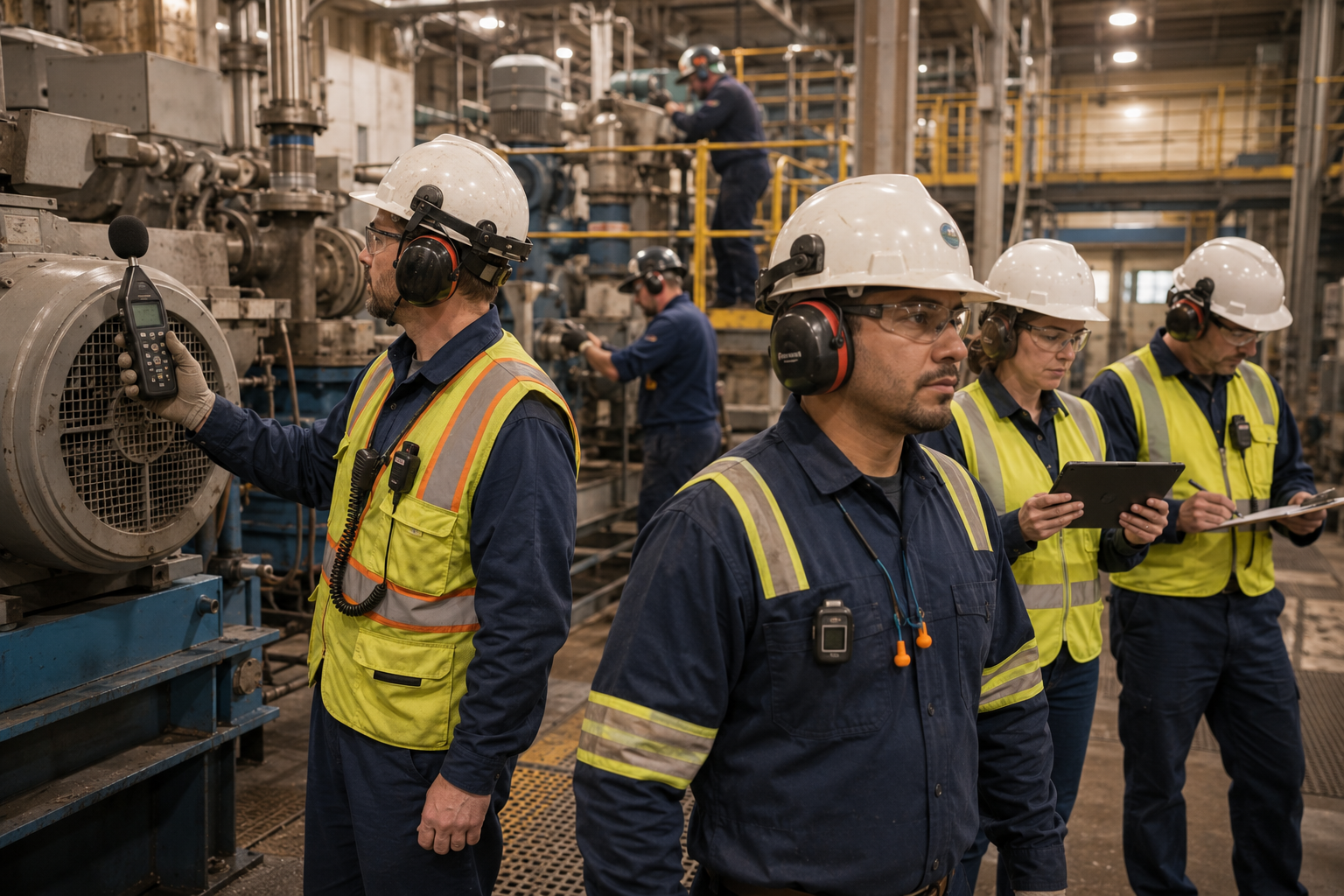
- Reviews real-world noise monitoring and mitigation practices including the use of sound measurement equipment to identify hazardous noise levels and implement corrective actions in workplace environments.
Certifications Obtained Upon Completion
Certificate of Completion in Noise Monitoring and Management
Regulatory Citations
OSHA 29 CFR 1910.95 (Occupational Noise Exposure)NIOSH Recommended Exposure Limits (RELs)
Additional Notes
This course is ideal for industrial hygienists, safety managers, and employees in noise-prone industries such as construction, manufacturing, and transportation.Emphasis is placed on practical noise monitoring techniques and actionable mitigation strategies to protect worker health.