
Incident Command ICS100
Course Program



Course Description
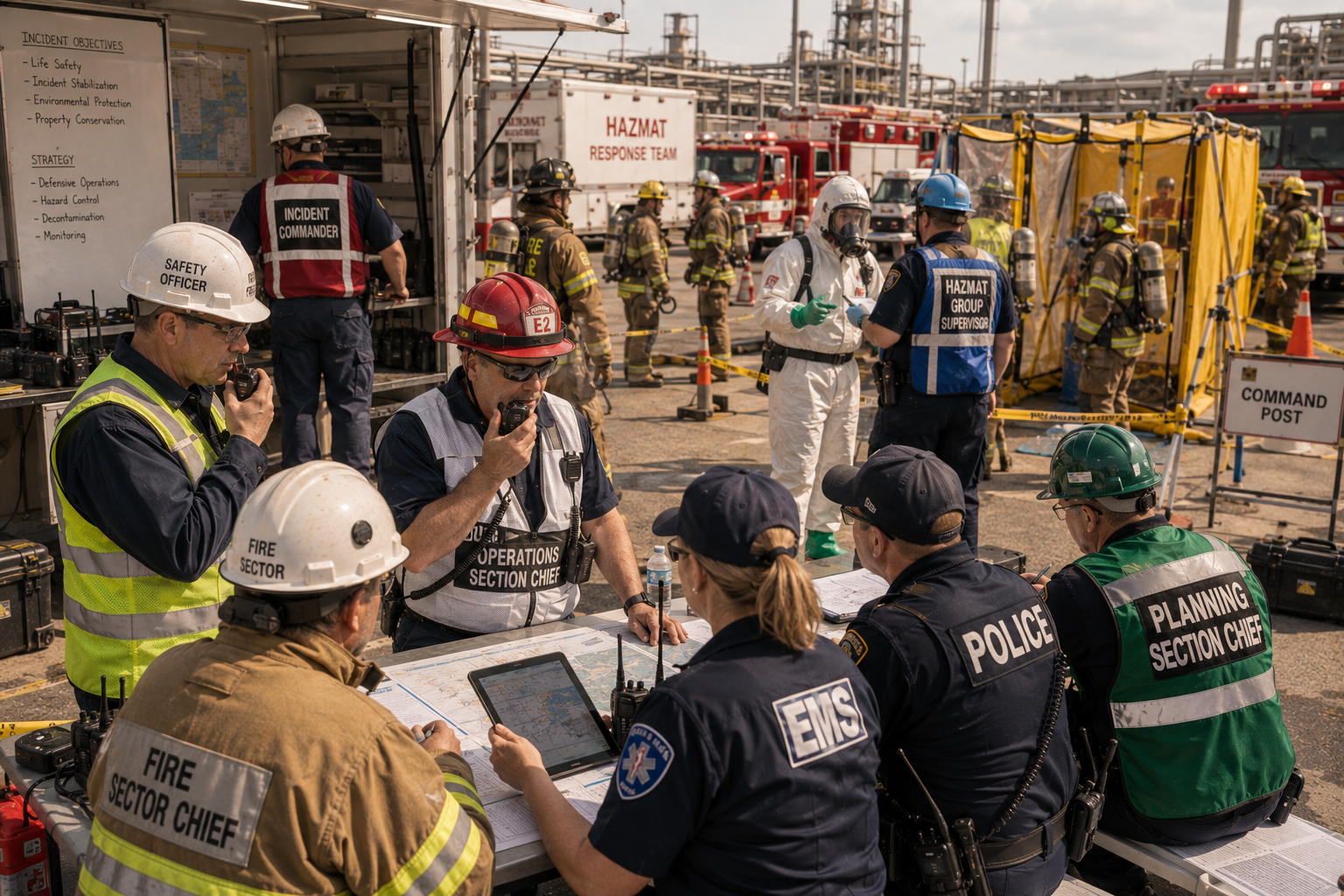
This introductory course provides a foundational understanding of the Incident Command System (ICS), including its history, principles, organizational structure, and integration with the National Incident Management System (NIMS). Participants will learn how ICS supports coordinated emergency planning, response, and recovery operations across a wide range of incident types.
- Explains the history, purpose, and core principles of the Incident Command System and how ICS is used by government agencies, private organizations, and nongovernmental entities during emergency response operations.
- Covers the relationship between ICS and the National Incident Management System (NIMS), including how the systems work together to support coordinated and scalable emergency management operations.
- Reviews the five primary ICS functional areas including command, operations, planning, logistics, and finance/administration along with the roles and responsibilities associated with each section.
- Explains how ICS principles are applied to employer-specific and local emergency response plans to improve communication, coordination, resource management, and operational effectiveness during incidents.
- Covers hazards and responder safety considerations associated with emergency response activities, including risks related to chemical protective clothing and the importance of proper decontamination procedures.
- Provides practical application exercises including tabletop scenarios and customer-specific incident simulations designed to reinforce ICS concepts, command structure coordination, and emergency response decision-making.
Certifications Obtained Upon Completion
Certificate of Completion in ICS100: Introduction to the Incident Command System
Regulatory Citations
FEMA National Incident Management System (NIMS) guidelinesOSHA 29 CFR 1910.120 (HAZWOPER - Emergency Response)
Additional Notes
This course is ideal for individuals involved in emergency planning, response, or recovery efforts, including government officials, private-sector employees, and NGO personnel.Emphasis is placed on building a strong foundation for higher-level ICS training and practical application in real-world scenarios.