Fire Suppression Systems
Course Program



Course Description
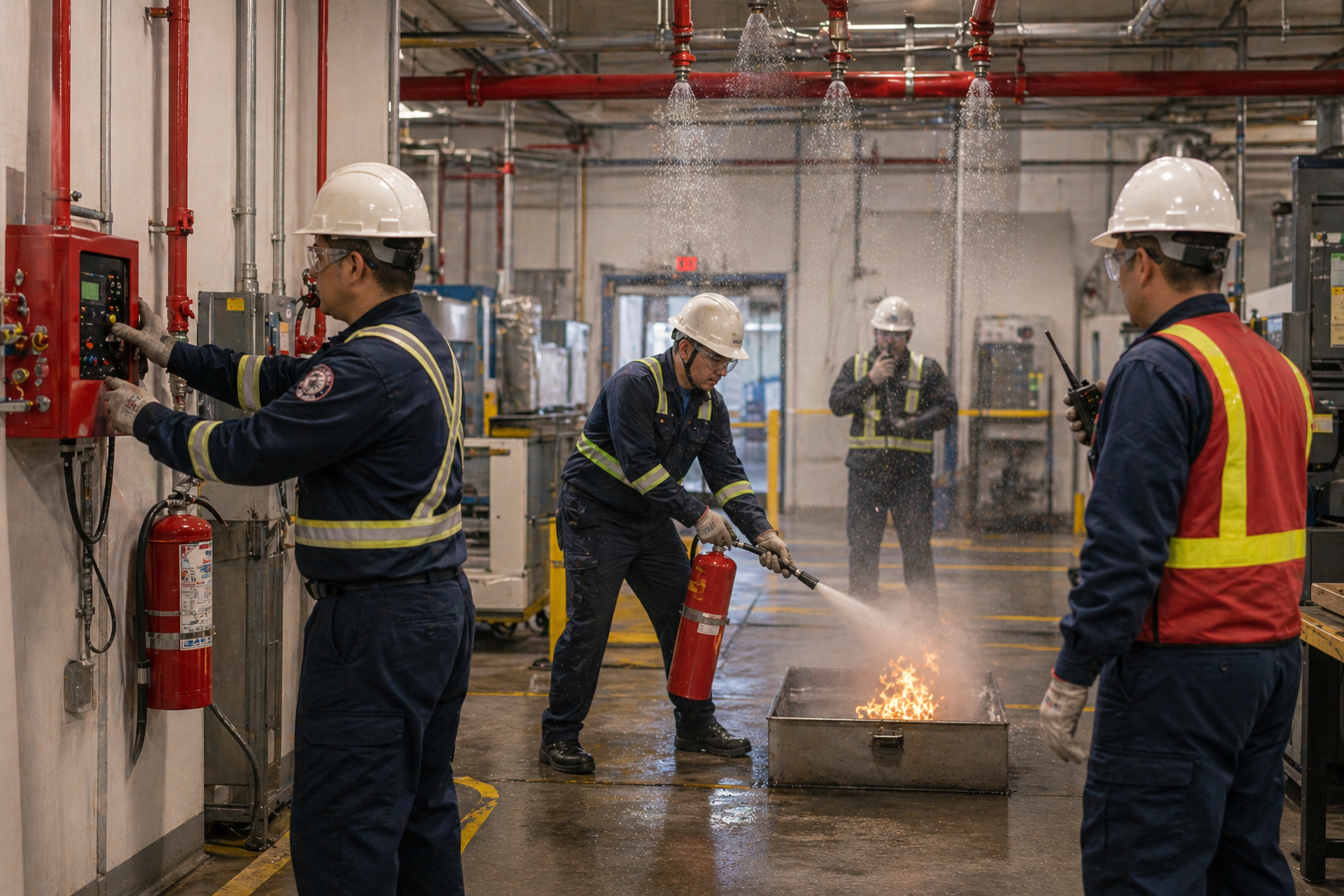
This course provides an in-depth understanding of fire suppression systems, their components, and their role in protecting lives and property. Participants will learn how these systems work, their applications in various environments, and the importance of training and preparedness for effective fire response.
- Understand the purpose and types of fire suppression systems, including:
- Clean agent systems (e.g., FM-200)
- Water mist, foam deluge, dry chemical, and wet chemical systems
- Explore key components of fire suppression systems:
- Control panels, nozzles, agent storage, detectors, and alarms
- Learn the Four P’s of Fire Safety: Plan, Procure, Practice, Prevent
- Recognize the importance of staff training in system operation and emergency response
- Review real-world success stories demonstrating the effectiveness of fire suppression systems
- Understand fire safety best practices, including evacuation planning, equipment maintenance, and extinguisher use (P.A.S.S. method)
- Address challenges in protecting vulnerable individuals during emergencies, including tailored evacuation plans and buddy systems
Certifications Obtained Upon Completion
Certificate of Completion in Fire Suppression Systems Awareness
Regulatory Citations
NFPA 10: Standard for Portable Fire Extinguishers, NFPA 13: Standard for the Installation of Sprinkler Systems, NFPA 17A: Standard for Wet Chemical Extinguishing Systems and OSHA 29 CFR 1910.160 (Fixed Extinguishing Systems)
Additional Notes
This course is ideal for facility managers, safety officers, and employees in environments with fire suppression systems. Emphasis is placed on system operation, maintenance, and the role of training in reducing fire risks and ensuring safety.