Boating Safety – Waterborne HAZMAT Spills (Non-Petroleum)
Course Program



Course Description
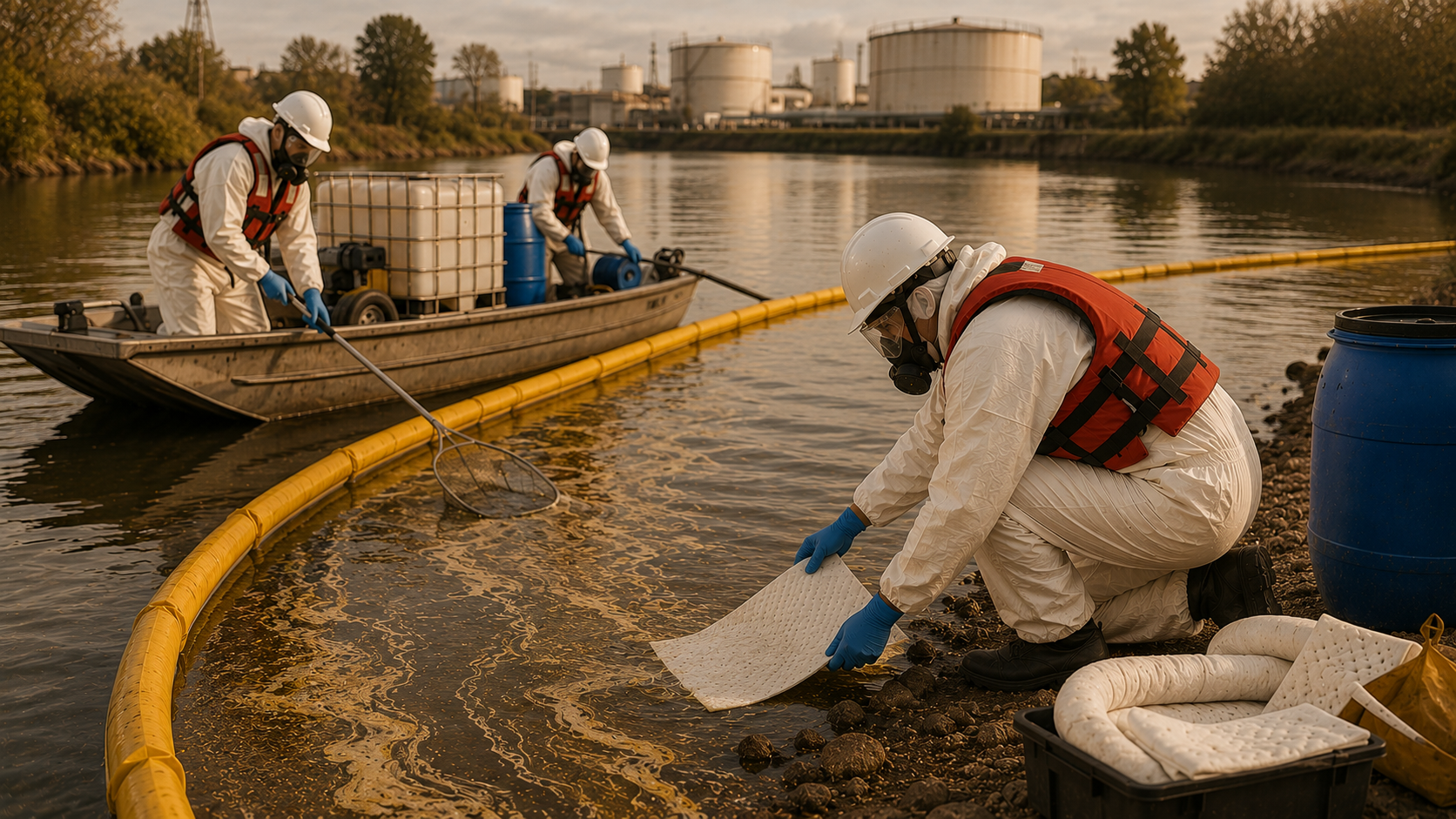
This course provides specialized training for responding to non-petroleum hazardous material spills in water. Participants will learn tailored response strategies, including containment, recovery, and environmental protection techniques, to address the unique challenges posed by non-petroleum substances like vegetable oils and animal fats.
- Explains the environmental and public health risks associated with non-petroleum oil spills, including releases involving vegetable oils, animal fats, and other non-petroleum substances that can impact waterways and ecosystems.
- Reviews the behavior of non-petroleum oils in aquatic environments, including differences in solubility, toxicity, biodegradation, oxygen depletion, and habitat impacts compared to petroleum-based products.
- Covers mechanical spill response techniques including the use of containment booms, skimmers, absorbents, and recovery equipment designed to control and remove non-petroleum substances from waterways.
- Explains non-mechanical spill response options such as aeration, coagulation, adsorption, and other treatment methods used when chemical dispersants or in-situ burning are ineffective or inappropriate.
- Reviews real-world spill response case studies, including lessons learned from large-scale non-petroleum oil spill incidents and the operational challenges associated with environmental cleanup efforts.
- Focuses on best practices for spill response including rapid substance identification, use of specialized spill response equipment, upstream containment strategies, and coordination with environmental response agencies.
- Covers the environmental and health impacts of non-petroleum oil contamination on aquatic ecosystems, wildlife, water quality, and public drinking water sources.
- Explains regulatory requirements and spill planning frameworks including Spill Prevention, Control, and Countermeasure (SPCC) plans, reporting obligations, and notification procedures related to non-petroleum oil releases.
Certifications Obtained Upon Completion
Certificate of Completion in Non-Petroleum Waterborne Spill Response
Regulatory Citations
EPA Spill Prevention, Control, and Countermeasure (SPCC) RuleClean Water Act (CWA) Section 311 for Oil and Hazardous SubstancesState-specific spill reporting and response requirements
Additional Notes
his course is ideal for maritime responders, environmental protection teams, and industries handling non-petroleum substances.Emphasis is placed on practical response strategies, environmental protection, and regulatory compliance.