
Biological & Chemical Threats in the Workplace
Course Program



Course Description
This course equips participants with the knowledge and skills to identify, mitigate, and respond to biological and chemical hazards in the workplace. The training emphasizes risk assessment, regulatory compliance, and prevention strategies to protect health and safety in diverse work environments.
-
Understanding Biological and Chemical Hazards:
Explains common biological hazards such as bacteria, viruses, fungi, molds, and toxins, as well as chemical hazards including solvents, pesticides, asbestos, lead, and industrial cleaning agents found in workplace environments. -
Routes of Exposure and Health Risks:
Covers the primary routes of hazardous exposure including inhalation, skin contact, ingestion, and injection while reviewing potential health effects such as respiratory damage, chronic illnesses, toxic exposure, and infectious diseases. -
Real-World Exposure Incidents and Workplace Impacts:
Reviews case studies and examples involving biological and chemical exposure incidents to demonstrate the operational, medical, and safety consequences of workplace contamination events. -
Regulatory Standards and Worker Protection Requirements:
Explains OSHA Hazard Communication requirements, permissible exposure limits (PELs), infectious disease control precautions, and workplace safety standards designed to protect employees from hazardous exposures. -
Hazard Prevention and Exposure Mitigation Strategies:
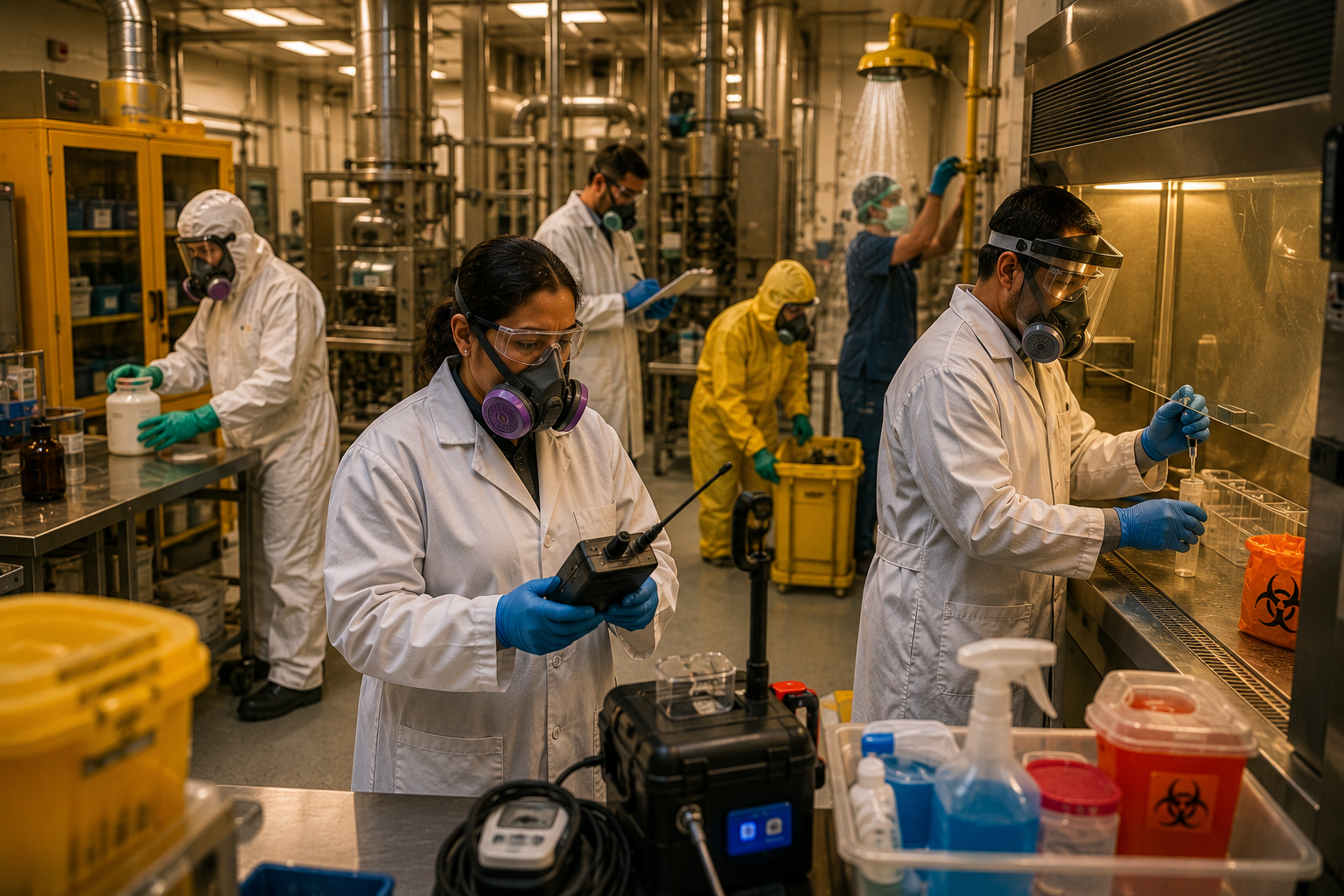
Covers engineering controls, administrative controls, workplace hygiene practices, ventilation systems, safe handling procedures, sharps disposal methods, and other strategies used to reduce biological and chemical exposure risks. -
Personal Protective Equipment (PPE) and Safety Practices:
Reviews the selection and proper use of personal protective equipment including gloves, respirators, face shields, and protective clothing used to minimize exposure to hazardous substances and infectious materials. -
Emerging Challenges and Innovations in Exposure Control:
Highlights evolving workplace safety challenges related to airborne biological hazards, pandemic preparedness, real-time exposure monitoring technologies, advanced air filtration systems, and integrated public health approaches such as One Health initiatives.
Certifications Obtained Upon Completion
Certificate of Completion for Biological & Chemical Threats in the Workplace Training
Regulatory Citations
OSHA Hazard Communication Standard (29 CFR 1910.1200)International Labour Organization (ILO) global standards for biological hazard protectionsOSHA Permissible Exposure Limits (PELs) for chemical concentrations
Additional Notes
This course is ideal for employees, safety officers, and managers in industries with potential biological and chemical exposure risks.Emphasis is placed on practical prevention strategies, regulatory compliance, and emerging technologies to ensure workplace safety.