
Active Shooter/Workplace Safety
Course Program



Course Description
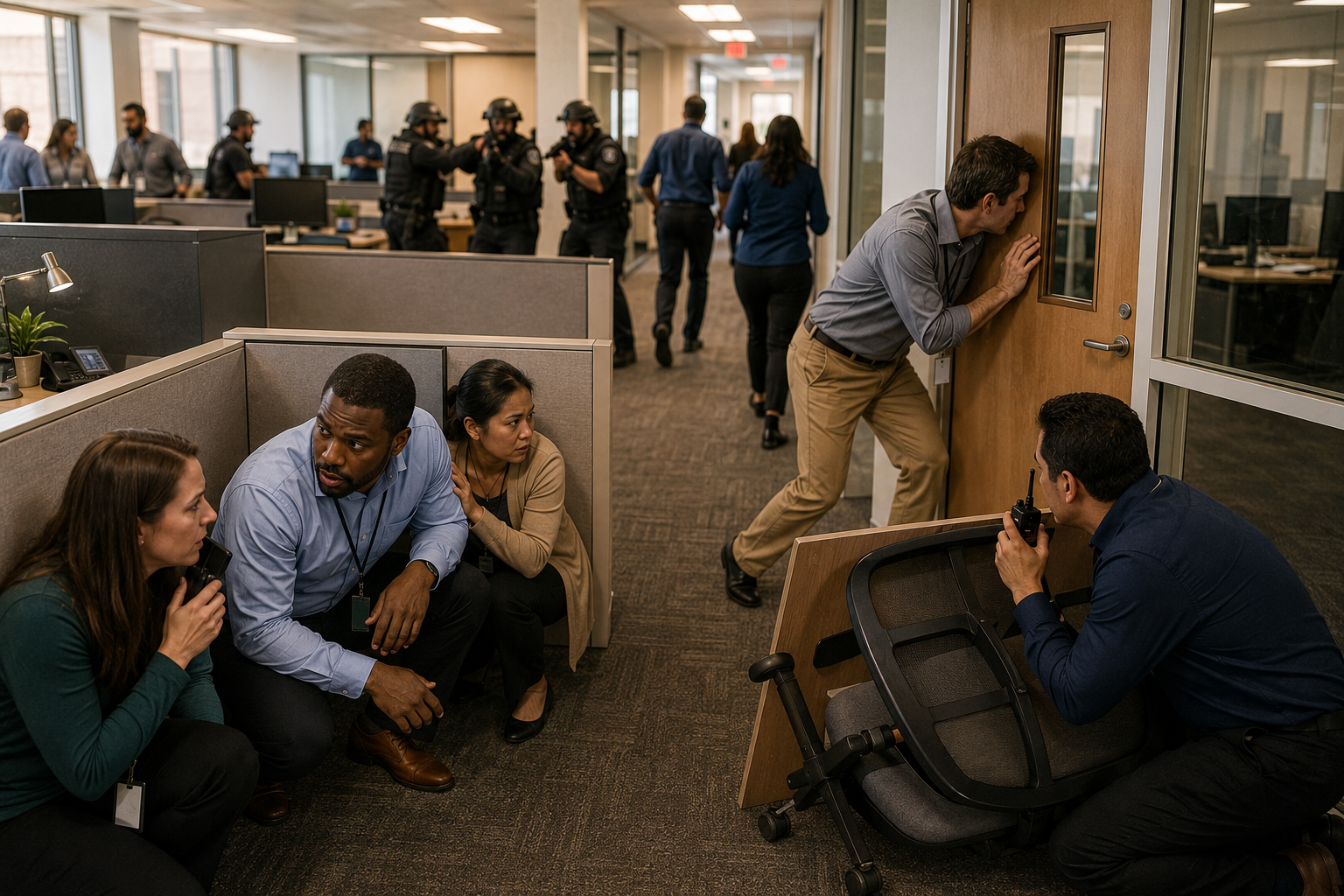
This Active Shooter/Workplace Safety course prepares participants to respond effectively during workplace violence incidents, including active shooter scenarios. The training emphasizes situational awareness, survival strategies, and coordination with law enforcement to enhance personal and workplace safety.
-
Developing a Survival Mindset During Emergencies:
Explains the importance of maintaining a proactive, alert, and survival-oriented mindset during active threat situations, including recognizing potential danger indicators and responding quickly to emergency conditions. -
Recognizing Threats and Emergency Situations:
Covers how to identify signs of an active shooter incident, including recognizing gunfire, suspicious behavior, and rapidly evolving threats within workplace or public environments. -
Emergency Response and Evacuation Strategies:
Reviews safe evacuation procedures, sheltering and hiding techniques, location security measures, and critical actions to take — and avoid — during active shooter emergencies. -
Law Enforcement Coordination and Communication:
Explains what individuals should expect when law enforcement arrives on scene and how to provide accurate, useful information regarding suspects, weapons, locations, and ongoing threats. -
Hands-On Active Shooter Training Exercises:
Provides scenario-based drills and practical exercises designed to reinforce emergency response strategies, improve situational awareness, and build confidence during active threat incidents.
Certifications Obtained Upon Completion
Certificate of Completion for Active Shooter/Workplace Safety Training
Regulatory Citations
OSHA General Duty Clause (Section 5(a)(1)) requiring a safe workplaceDepartment of Homeland Security (DHS) guidelines for active shooter preparedness
Additional Notes
This course is ideal for employees, managers, and workplace safety teams seeking to enhance preparedness for workplace violence incidents.Emphasis is placed on practical skills, situational awareness, and effective communication to ensure safety during high-stress situations.