
Emergency Operations Center Training (EOC)
Course Program



Course Description
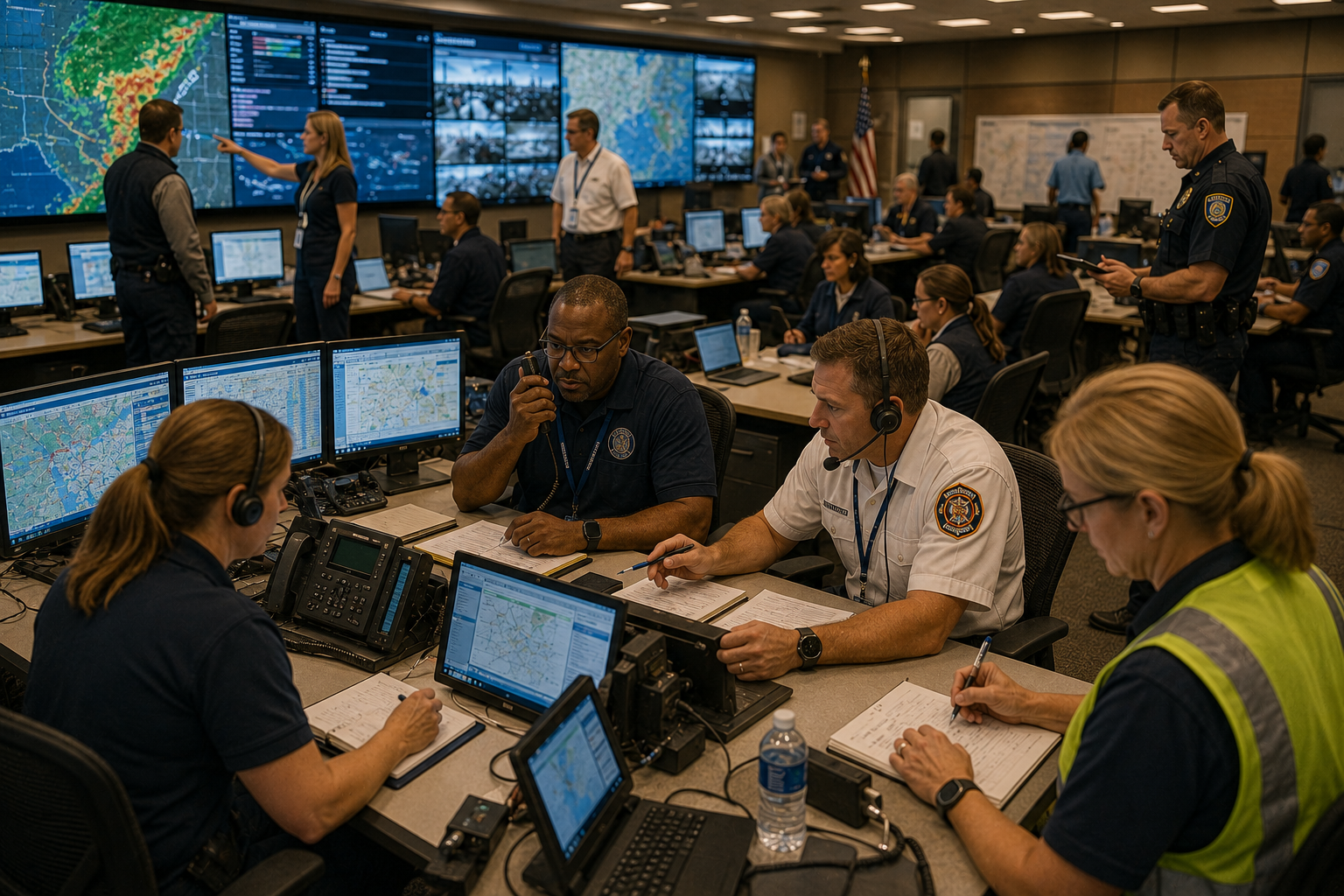
This Emergency Operations Center (EOC) Training provides participants with a comprehensive understanding of the role, design, and functions of EOCs within a multi-agency coordination system. The course includes disaster-related case studies and practical exercises to enhance coordination and operational effectiveness at local, state, and federal levels.
- EOC Operations and NIMS Requirements:
Explains the relationship between Emergency Operations Center (EOC) operations and the National Incident Management System (NIMS), including the role of EOCs in supporting multi-agency coordination during emergencies. - EOC and Incident Command System (ICS) Integration:
Covers how EOCs integrate with on-scene Incident Command System (ICS) structures to support seamless communication, coordination, and incident management. - EOC Staffing and Resource Management:
Identifies staffing, information, systems, equipment, and organizational requirements necessary to maintain effective and coordinated EOC operations. - Alternate EOC Facility Planning:
Reviews strategies for identifying, evaluating, and preparing alternate EOC locations to maintain operational continuity during facility disruptions or emergencies. - Training, Exercises, and Resource Planning:
Focuses on developing training, testing, and exercise plans for EOC personnel while establishing processes to review and update EOC resources, systems, and technology requirements.
Certifications Obtained Upon Completion
Certificate of Completion for Emergency Operations Center (EOC) Training
Regulatory Citations
National Incident Management System (NIMS) compliance for emergency operationsFEMA guidelines for Emergency Operations Centers and multi-agency coordination
Additional Notes
This course is ideal for emergency managers, public safety officials, and personnel involved in disaster response and coordination.Emphasis is placed on practical application, resource planning, and fostering effective multi-agency collaboration during emergencies.