
Air Monitoring with Emphasis on Direct Reading Real Time Monitors
Course Program



Course Description
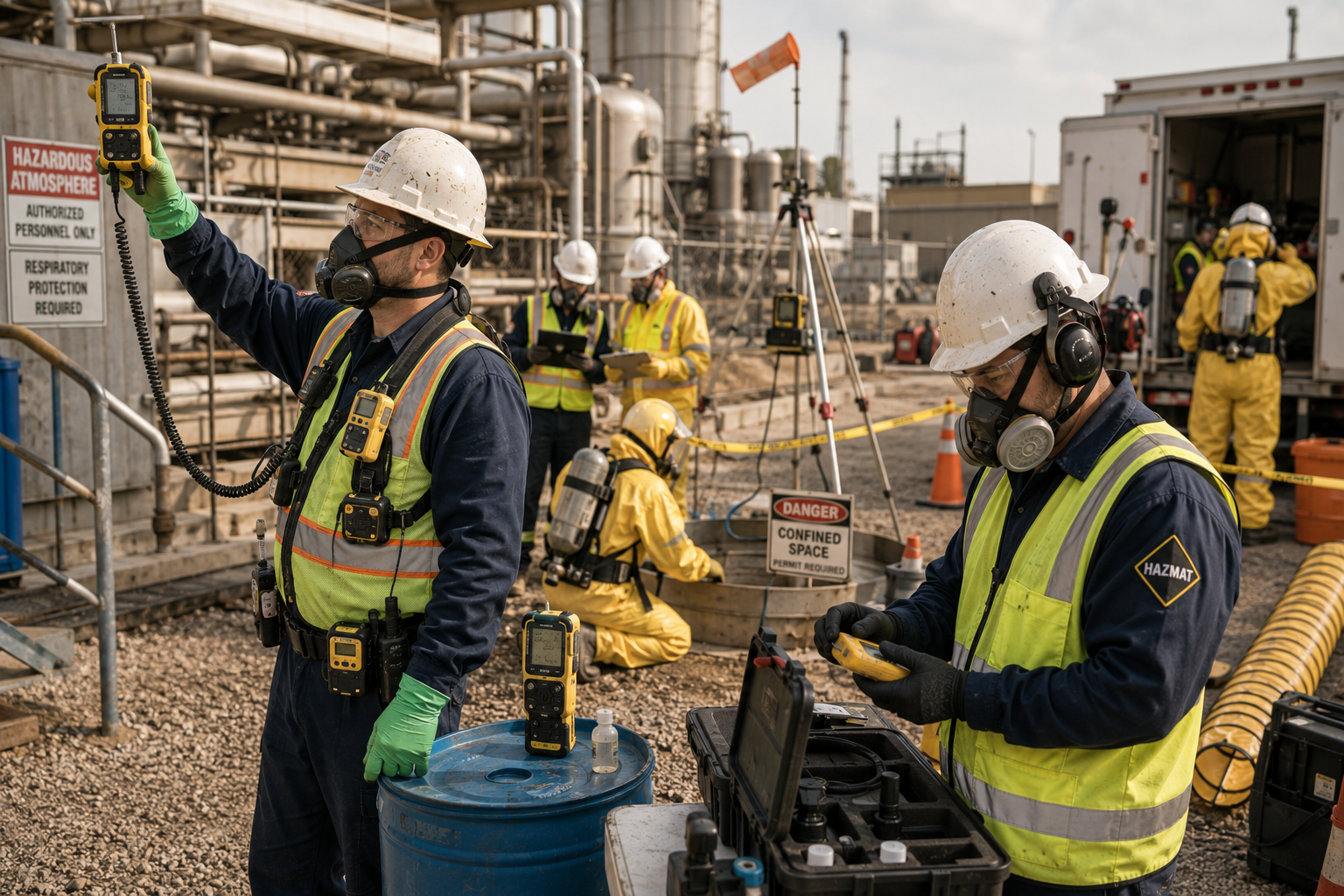
This course provides comprehensive training on air monitoring for hazardous materials, focusing on the use of direct-reading real-time monitors. Participants will learn to identify hazardous atmospheres, operate advanced air monitoring technologies, and develop effective sampling strategies to protect health and the environment.
- Explains the importance of air monitoring in identifying hazardous airborne materials and protecting workers, communities, and the environment from dangerous atmospheric conditions.
- Covers hazardous atmosphere types including oxygen-deficient or oxygen-enriched environments, flammable gases and vapors, toxic airborne contaminants, and hazardous particulates that may exceed safe exposure limits.
- Reviews common hazardous substances encountered during air monitoring operations including carbon monoxide, hydrogen sulfide, chlorine, benzene, asbestos, formaldehyde, and other toxic industrial chemicals.
- Explains the operation and application of air monitoring technologies including combustible gas indicators (CGI), oxygen monitors, photoionization detectors (PID), flame ionization detectors (FID), gas chromatographs, aerosol monitors, and sampling pumps.
- Covers the importance of proper instrument calibration, equipment maintenance, sensor limitations, and understanding monitoring technology capabilities during hazardous atmosphere assessments.
- Reviews air monitoring strategies including confined space atmospheric testing, continuous monitoring, non-automatic sampling methods, air dispersion modeling, and the development of site-specific monitoring plans.
- Explains regulatory requirements and industry standards related to air monitoring including OSHA confined space regulations, NFPA hazardous materials response standards, and EPA emergency air monitoring guidance.
- Highlights real-world air monitoring applications used during emergency response operations, industrial hygiene assessments, hazardous material incidents, and environmental contamination investigations.
- Covers current challenges and emerging innovations in air monitoring technology including advanced sensors, artificial intelligence integration, improved detection capabilities, and explosion-proof monitoring equipment.
Certifications Obtained Upon Completion
Certificate of Completion in Air Monitoring for Hazardous Materials
Regulatory Citations
OSHA 29 CFR 1910.146 (Permit-Required Confined Space)NFPA 1072 (Hazardous Materials Emergency Response)EPA Air Monitoring Guidance and Standards
Additional Notes
This course is ideal for industrial hygienists, emergency responders, and safety professionals involved in hazardous materials management.Emphasis is placed on practical applications, regulatory compliance, and the latest innovations in air monitoring technology.