
Decon Training (HAZMAT Operations)
Course Program



Course Description
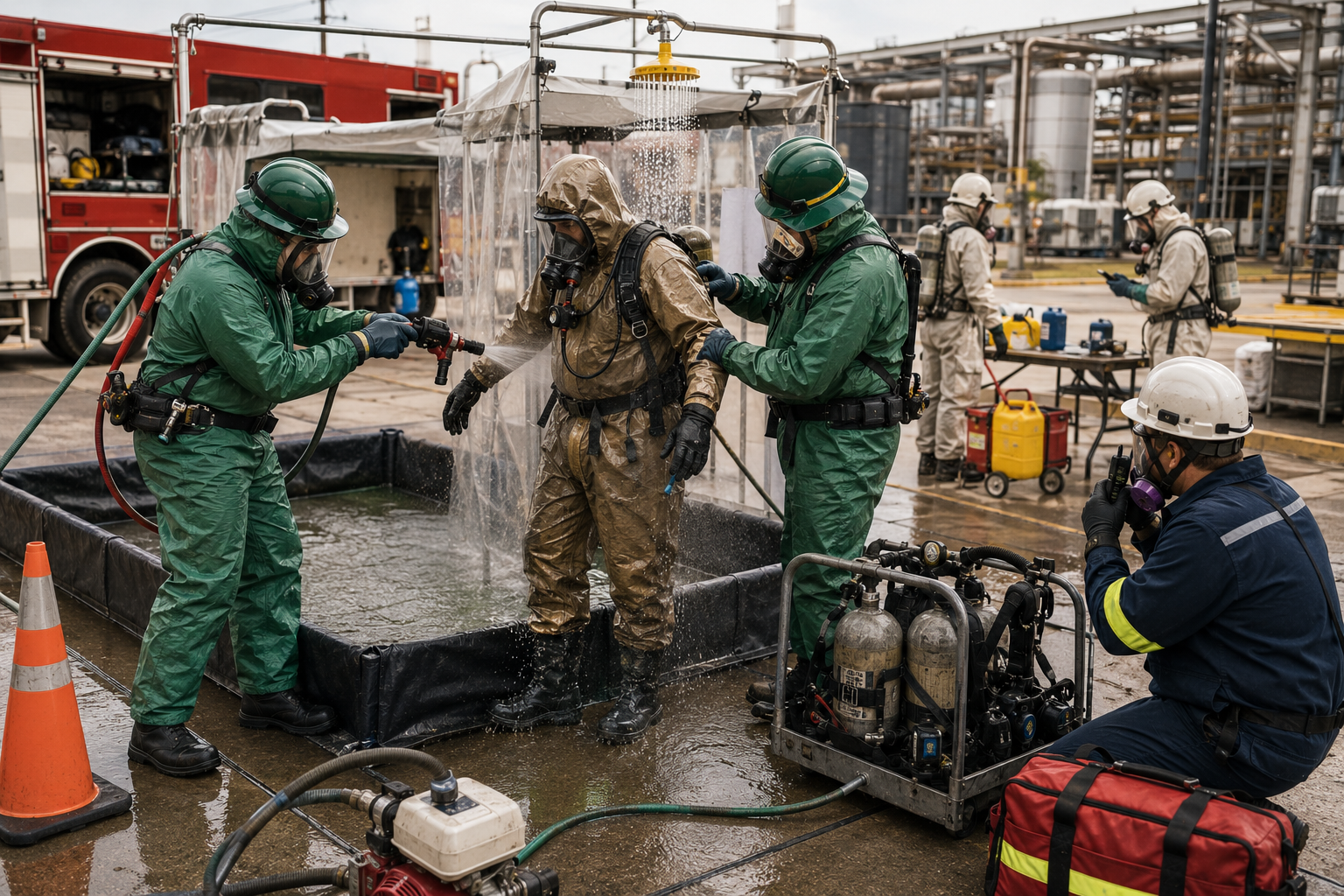
This 16-hour specialized training prepares HAZMAT responders to perform effective decontamination operations, including emergency, technical, and mass decontamination. Participants will learn to protect responders, victims, and the environment while adhering to NFPA 1072 and OSHA standards.
- Understand the critical role of decontamination in HAZMAT response
- Review NFPA 1072 and OSHA 29 CFR 1910.120 standards for operations
- Awareness Level: Hazard recognition and emergency notifications
- Operations Level: Defensive containment and exposure prevention
- Technician Level: Hands-on mitigation and decontamination techniques
- Specialist & Incident Commander: Advanced strategy and oversight
- Emergency Decon: Rapid removal of contaminants to reduce harm
- Technical Decon: Stepwise removal using specialized equipment
- Mass Decon: Efficient processing of large groups during major events
- Site selection and runoff containment to minimize environmental impact
- Use of NFPA 1971 Level 2 PPE and SCBA for hazardous atmospheres
- Proper donning, doffing, maintenance, and inspection to prevent secondary contamination
- OSHA Awareness and Operations Level training for hospital staff
- Patient decontamination procedures, including self-care, mass casualty, and technical decon
- Coordination with emergency responders for seamless victim care
- Rapid hazard assessment and risk communication under pressure
- Managing environmental impact and legal considerations during decontamination
- Integration of the Incident Command System (ICS) for coordinated response
- Continuous training and drills to maintain readiness and proficiency
Certifications Obtained Upon Completion
Importance of Decontamination Training:Understand the critical role of decontamination in HAZMAT responseReview NFPA 1072 and OSHA 29 CFR 1910.120 standards for operationsLevels of HAZMAT Training:Awareness Level: Hazard recognition and emergency notificationsOperations Level: Defensive containment and exposure preventionTechnician Level: Hands-on mitigation and decontamination techniquesSpecialist & Incident Commander: Advanced strategy and oversightDecontamination Methods and Procedures:Emergency Decon: Rapid removal of contaminants to reduce harmTechnical Decon: Stepwise removal using specialized equipmentMass Decon: Efficient processing of large groups during major eventsSite selection and runoff containment to minimize environmental impactPersonal Protective Equipment (PPE):Use of NFPA 1971 Level 2 PPE and SCBA for hazardous atmospheresProper donning, doffing, maintenance, and inspection to prevent secondary contaminationHospital & First Receiver Decontamination:OSHA Awareness and Operations Level training for hospital staffPatient decontamination procedures, including self-care, mass casualty, and technical deconCoordination with emergency responders for seamless victim careChallenges and Best Practices:Rapid hazard assessment and risk communication under pressureManaging environmental impact and legal considerations during decontaminationIntegration of the Incident Command System (ICS) for coordinated responseContinuous training and drills to maintain readiness and proficiency
Regulatory Citations
NFPA 1072 Chapters 6.3 (Mass Decon) & 6.4 (Technical Decon)OSHA 29 CFR 1910.120 (Hazardous Waste Operations and Emergency Response - HAZWOPER)
Additional Notes
This course includes both classroom instruction and hands-on field exercises.Ideal for HAZMAT responders, hospital staff, and emergency personnel involved in decontamination operations.