Flammable & Combustible Liquids (Storage / Hazards
Course Program



Course Description
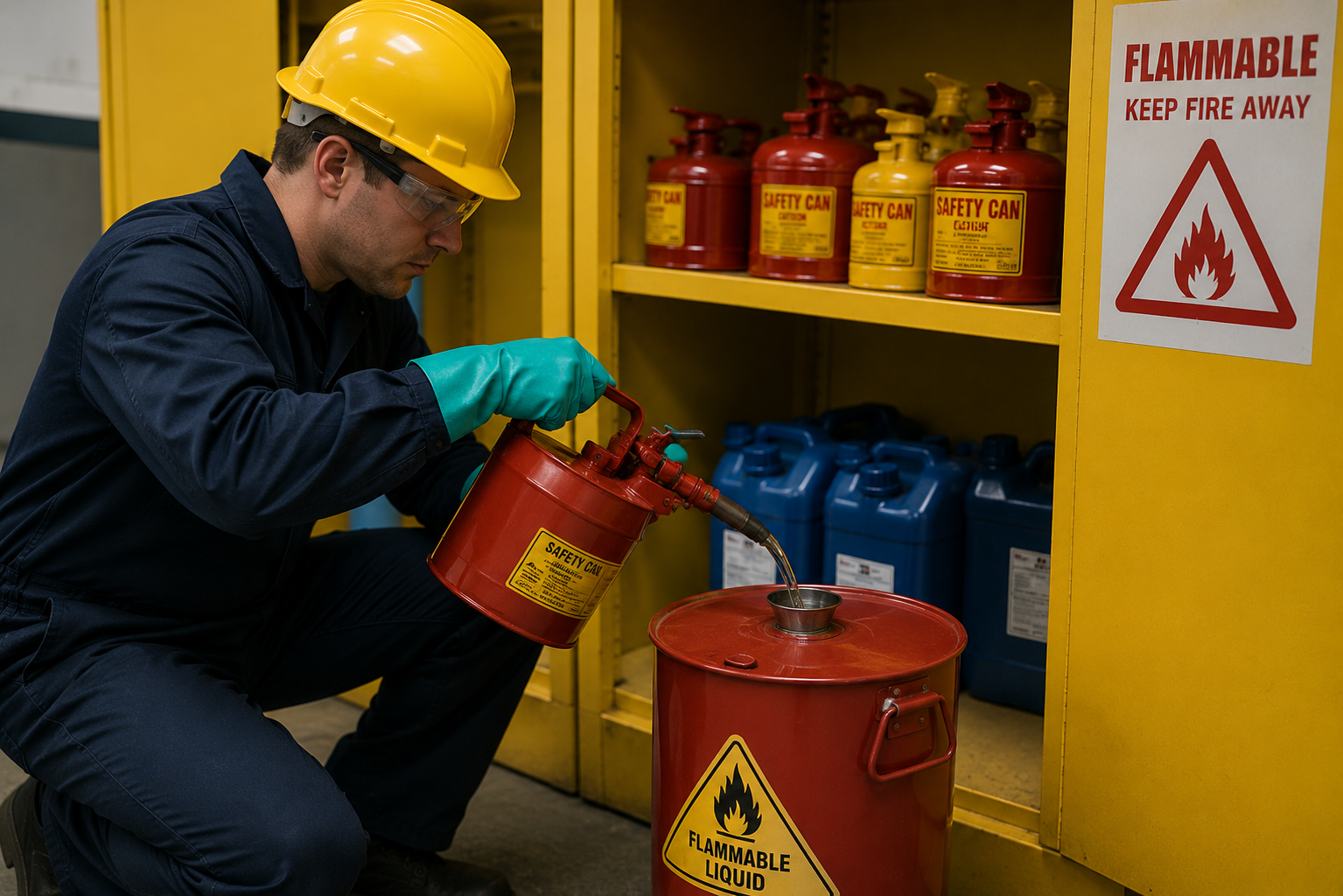
This training focuses on the safe handling, storage, and disposal of flammable and combustible liquids. Participants will learn about chemical hazards, proper storage and transportation practices, and compliance with OSHA standards to minimize risks in the workplace.
-
Chemical Hazard Communication (HAZCOM)
- Understand the purpose of Hazard Communication programs and chemical safety requirements.
- Identify common chemical hazards found in workplace environments, including flammable and combustible products.
- Recognize employer and employee responsibilities for communicating chemical hazards effectively.
-
Safety Data Sheets and Chemical Labeling
- Learn how to locate and interpret information contained in Safety Data Sheets (SDS).
- Understand chemical labeling requirements and hazard communication elements.
- Recognize how SDSs and labels support safe handling, storage, and emergency response activities.
-
Chemical Hazard Recognition
- Identify physical and health hazards associated with workplace chemicals.
- Recognize hazards related to flammable, combustible, reactive, and toxic substances.
- Apply hazard awareness techniques to reduce the risk of chemical exposure and incidents.
-
Chemical Storage Safety
- Understand safe storage requirements for flammable and combustible liquids.
- Recognize the importance of proper segregation, containment, and ventilation.
- Apply best practices to minimize the risk of leaks, spills, fires, and chemical reactions.
-
Chemical Transportation Safety
- Understand requirements for safely transporting hazardous chemicals and materials.
- Recognize hazards associated with moving, loading, and unloading chemical products.
- Maintain compliance with applicable transportation and handling regulations.
-
Chemical Handling and Use
- Apply safe work practices when handling and using hazardous chemicals.
- Recognize procedures that reduce exposure risks and prevent accidental releases.
- Understand the importance of following manufacturer instructions and workplace procedures.
-
Personal Protective Equipment (PPE)
- Identify personal protective equipment required for chemical handling and use.
- Understand the proper selection, use, inspection, and maintenance of PPE.
- Recognize the limitations of PPE and its role in a comprehensive chemical safety program.
-
Spill Prevention and Emergency Response
- Recognize conditions that may lead to chemical spills, leaks, or releases.
- Understand emergency response procedures for chemical incidents.
- Apply reporting, containment, and response practices that protect employees and the environment.
-
Chemical Waste Management and Disposal
- Understand requirements for the safe disposal of hazardous and flammable chemicals.
- Recognize environmental and safety concerns associated with improper disposal practices.
- Maintain compliance with applicable waste management and disposal regulations.
-
Training, Compliance, and Continuous Improvement
- Understand employee responsibilities for chemical safety and hazard reporting.
- Support compliance through training, inspections, and safe work practices.
- Promote a culture of safety through hazard awareness, communication, and continuous improvement.
Certifications Obtained Upon Completion
Certificate of Completion for Flammable & Combustible Liquids Safety Training
Regulatory Citations
OSHA Flammable and Combustible Liquids Standards (29 CFR 1910.106)OSHA Hazard Communication Standards (29 CFR 1910.1200)DOT Hazardous Materials Regulations (49 CFR Parts 171-180)EPA Resource Conservation and Recovery Act (RCRA) for chemical disposal
Additional Notes
This course is ideal for employees working with or around flammable and combustible liquids in industries such as construction, manufacturing, and transportation.Emphasis is placed on hazard prevention, safe practices, and regulatory compliance to ensure a safe working environment.