
Compressed Gas Cylinder Safety
Course Program



Course Description
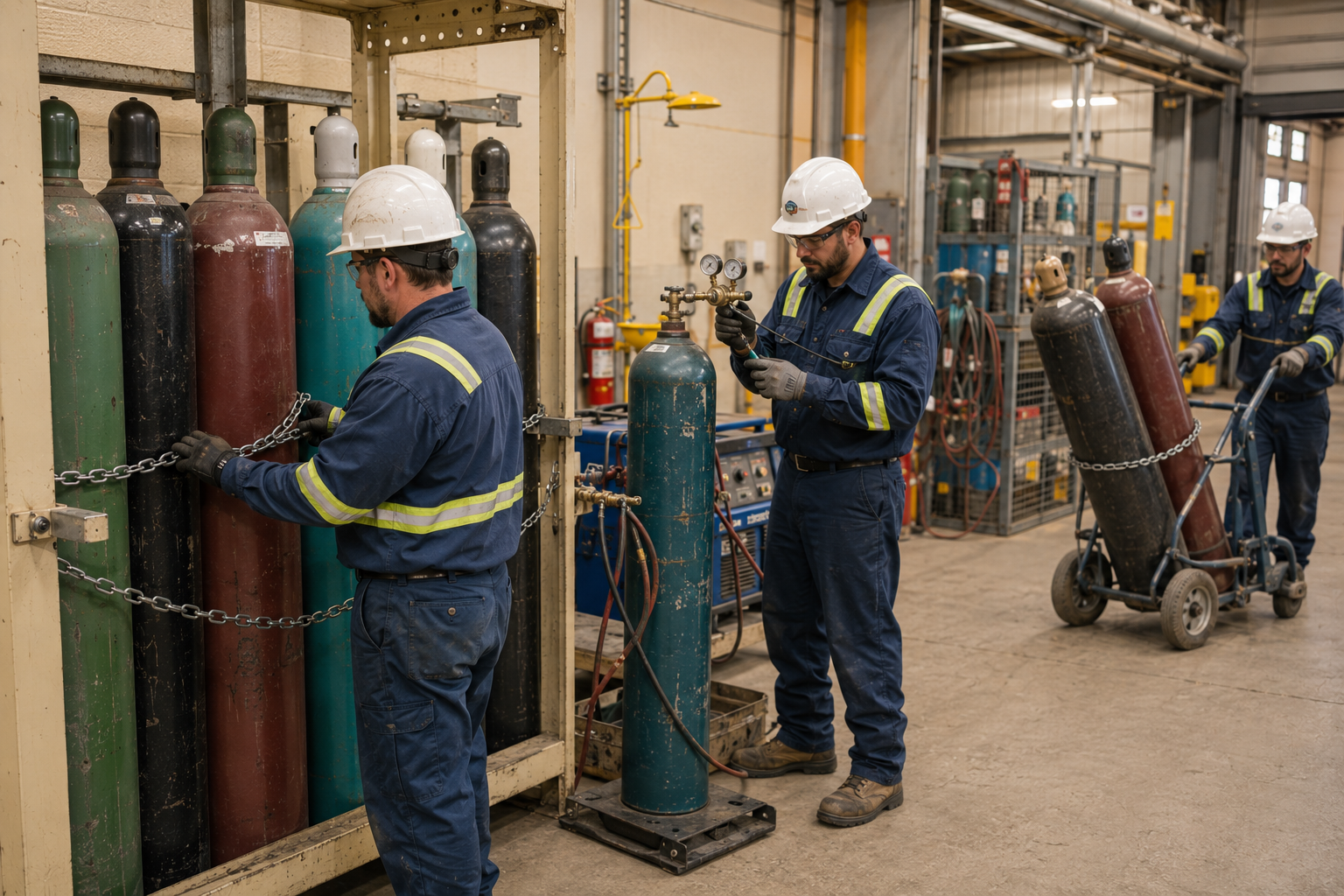
This Compressed Gas Cylinder Safety training provides essential knowledge on the safe handling, storage, and use of compressed gas cylinders to prevent accidents and ensure compliance with OSHA and CGA standards. Participants will learn about potential hazards, emergency preparedness, and best practices to protect lives and property.
- Risks of flammability, toxicity, asphyxiation, and high-pressure injuries
- Real-world examples of accidents and their consequences
- OSHA 1910.101 requirements for inspections, labeling, and training
- Compressed Gas Association (CGA) guidelines for safe handling and storage
- Importance of verifying cylinder labels and avoiding reliance on color coding
- Proper labeling of gas lines and handling unclear or damaged cylinders
- Storing cylinders upright and secured with chains or straps
- Segregating oxidizers from flammable gases and maintaining safe temperatures
- Special considerations for acetylene cylinder storage
- Proper training for personnel handling compressed gases
- Safe practices for opening valves, using tools, and avoiding tampering
- Using appropriate carts or lifting devices for cylinder movement
- Securing cylinders during transport to prevent falls or collisions
- Emergency Preparedness and Leak Response:
- Developing emergency plans for leaks, fires, or exposures
- Safe leak detection methods and immediate response protocols
- Ensuring fire extinguishers are accessible in areas with flammable gases
- Preventing valve failures, regulator malfunctions, and incompatible gas storage accidents
- Importance of regular inspections and adherence to safety standards
Certifications Obtained Upon Completion
Certificate of Completion for Compressed Gas Cylinder Safety Training
Regulatory Citations
OSHA General Industry Standards (29 CFR 1910.101)Compressed Gas Association (CGA) Guidelines
Additional Notes
This course is ideal for employees working with or near compressed gas cylinders in industrial, construction, or laboratory settings.Emphasis is placed on hazard prevention, regulatory compliance, and emergency preparedness to ensure a safe working environment.