
Fire Behavior
Course Program



Course Description
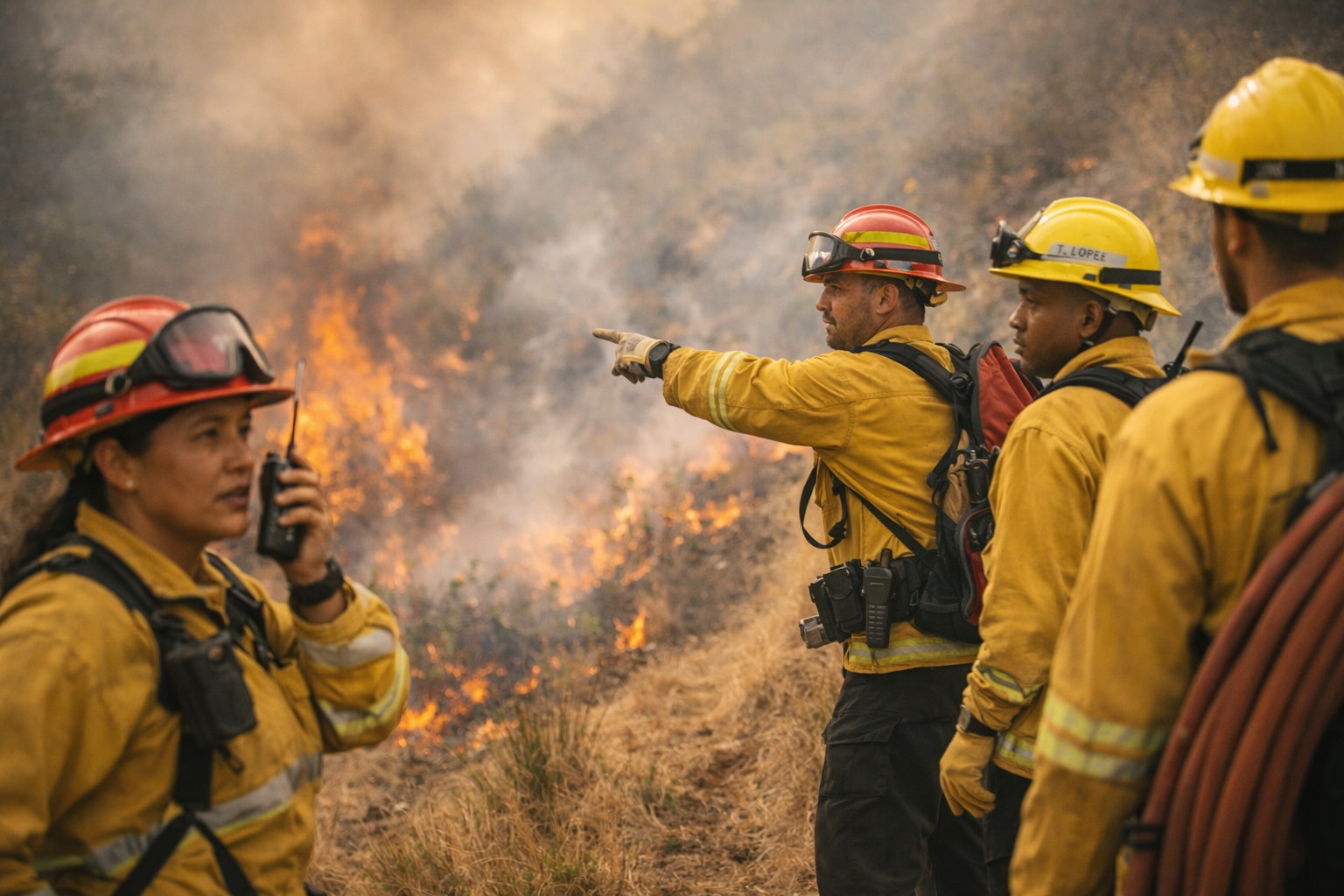
This course provides an in-depth understanding of fire dynamics, including the factors that influence fire behavior such as heat transfer, fuel types, weather, and topography. Participants will learn to predict fire spread, recognize extreme fire behavior, and apply safety strategies to manage fireground risks effectively.
- Understand the fire triangle (heat, fuel, oxygen) and its role in fire behavior
- Explore the three methods of heat transfer: radiation, convection, and conduction
- Identify fuel factors affecting fire behavior, including fuel types, moisture, and arrangement
- Analyze the impact of weather on fire spread, including wind, temperature, and humidity
- Learn how topography influences fire behavior, such as slope, aspect, and terrain features
- Recognize signs of extreme fire behavior, including rapid spread, spotting, and erratic flames
- Apply fire behavior knowledge to enhance firefighter safety using LCES (Lookouts, Communications, Escape routes, Safety zones)
- Continuously assess environmental and weather conditions to anticipate fire behavior changes
Certifications Obtained Upon Completion
Certificate of Completion in Fire Behavior and Dynamics
Regulatory Citations
NFPA 921: Guide for Fire and Explosion Investigations and NFPA 1500: Standard on Fire Department Occupational Safety, Health, and Wellness Program
Additional Notes
This course is ideal for firefighters, emergency responders, and safety professionals involved in fire management. Includes practical applications of fire behavior knowledge to improve decision-making and reduce risks on the fireground.